I used to treat every repeated task as a habit. If something appeared twice on my list, I gave it a schedule, a streak, and more importance than it had earned.
Some repeated tasks are useful enough to become automatic. Others need judgment, a checklist, or a finish line. The goal is to make proven actions easier to begin.
A task, a routine, and a habit are not the same
A task has an outcome or finish line: send the invoice, book the appointment, submit the report. Even when it repeats, the situation may change.
A routine is a sequence you repeat deliberately, such as reviewing your week. Familiarity helps, but the steps may still require attention.
A habit is a response that a recurring cue begins to trigger with less deliberation. Researchers describe it as an association learned by repeating the same response in a recurring context, not simply anything done often (Wood and Rünger, 2016).
Why graduate a repeated task at all?
When a repeated task already works, turning it into a habit can make the result more reliable:
Less remembering: the context becomes the prompt.
Less repeated choosing: you decide the action once instead of debating it each time.
More consistency: the behavior has a place on ordinary days.
Better feedback: a clear action creates useful history.
"Get healthy" is a direction. "Walk for ten minutes after lunch" can meet the same cue again and again.
The seven-question graduation test
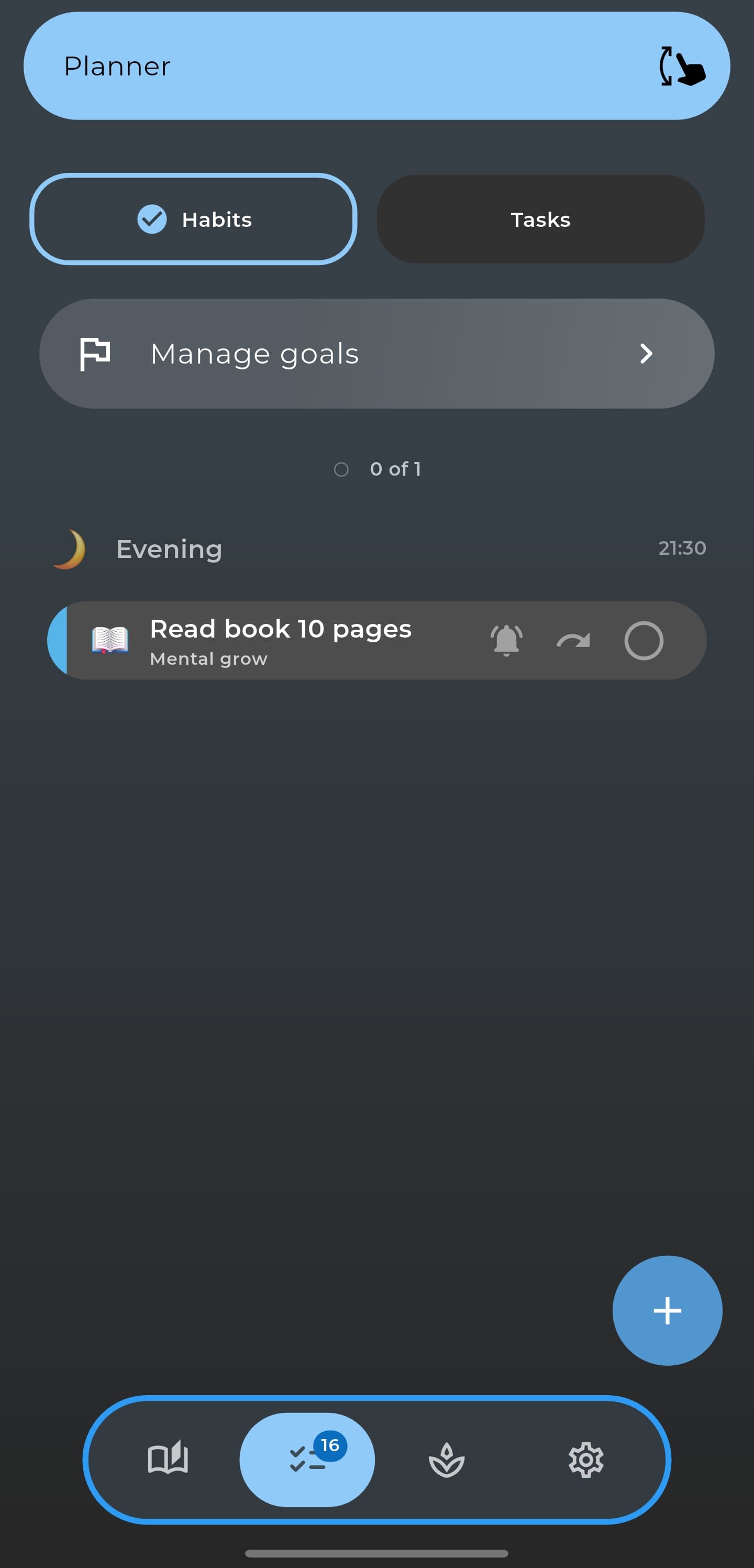
Before moving a repeated task into Planner's Habits view, ask:
Does it still earn its place? Repetition has shown a real benefit.
Is the action observable? You know exactly what done means. "Read one page" is clearer than "become a reader."
Is there a stable cue? The same event, time, place, or day moment appears often enough to start it.
Can the first version stay small? The minimum fits a tired or busy day.
Is repetition useful? Doing it again improves something.
Is it safe to start without fresh judgment? The action is low-risk, or it only begins a checklist that preserves judgment.
Can you recover cleanly? A missed opportunity is not catastrophic, and the next cue offers a restart.
There is no scientific cutoff for "task graduation." Test several real cycles. If the steps keep changing, keep it as a routine. If it ends in a deliverable, keep it as a task. If it is valuable, specific, safely repeatable, and tied to a stable cue, it is ready to become a habit.
Design the loop: cue, action, reward
1. Choose a cue you can actually encounter
"Sometime in the morning" asks you to remember. "After I put my breakfast bowl in the sink" gives the action a handhold.
Psychologist Peter Gollwitzer calls this an implementation intention: when situation X occurs, perform response Y. These plans can help translate goals into action, especially when starting is difficult (Gollwitzer, 1999). James Clear applies the same idea in Atomic Habits and his guide to specific habit cues.
In Planner, choose a day moment such as After lunch only when it is stable. A notification may help at first, but the lasting cue should belong to daily life.
2. Make the action smaller than your ambition
Your goal can be "read more" while the repeatable action is "read one page." The small version protects the cue-action link when energy is low.
Reduce friction around the first movement: leave the book visible, put walking shoes by the door, or open tomorrow's journal prompt before closing the app.
3. Give the repetition an immediate reason to feel good
The delayed result cannot reward today's repetition. Choose the walk you enjoy, pair reading with a comfortable chair, notice the relief of clearing the desk, or mark completion and watch the history grow.
Across several studies, immediate rewards such as enjoyment were more strongly associated with persistence than delayed benefits (Woolley and Fishbach, 2017). A habit does not need a prize, but it should not feel like daily punishment.
4. Let identity guide the choice, not replace the reps
Clear's identity framing can make a small action meaningful: "I am someone who closes the day calmly." But identity is not magic. A recent review found a strong association between identity and health habits while noting that limited predictive research does not establish simple one-way causation (Zhu and colleagues, 2025). Let identity guide the choice; use cue-consistent repetition to build the habit.
How long habit formation really takes
The famous "21 days" rule is not dependable. In the often-cited real-world study by Phillippa Lally and colleagues, the model fit well for a small number of participants. Their median time to reach 95% of the automaticity plateau was 66 days, ranging from 18 to 254 (Lally and colleagues, 2010).
The range matters more than the headline. The study also found that missing one opportunity did not materially affect formation. Use a streak as a record: consistency matters, but perfection does not.
Measure the habit, the action, and the result
A useful weekly review asks three questions:
Repetition: Of the real opportunities, how often did I act?
Automaticity: Did the cue bring the action to mind, and did starting require less deliberation?
Value: Is the behavior still producing the result that justified it?
Researchers use formal measures such as the Self-Report Behavioural Automaticity Index (Gardner and colleagues, 2012). For a lighter check, rate "this starts without much thought" from 1 to 5, then compare that with Planner's history and the outcome you care about. The stats button in Planner shows how each week or month went, which makes this review take a minute.
Failure is data
When a repetition fails, ask what changed:
The cue disappeared: choose a backup cue or mark an intentional skip.
The action was too large: return to the minimum.
The environment fought you: prepare the first step earlier.
The behavior stopped helping: retire it. A streak cannot justify a bad system.
Resume at the next real cue. If the same failure repeats, move the item back to a task or routine and redesign it.
Three examples in Planner
A repeated task that should become a habit
"Walk after lunch" reliably improves your afternoon. Graduate it to a Habit on workdays, attach it to After lunch, and make ten minutes the minimum.
A repeated task that should stay a routine
"Weekly review" happens every Sunday, but the steps change with the week: some weeks it's the calendar, some weeks it's a hard conversation you've been putting off. Keep it as a Task you plan each week, with a short checklist in its notes. The cue is stable, but the action still needs judgment every time.
A repeated task that should stay a task
"Pay the rent" repeats every month, yet it has a clear finish line and a real deadline. Give it a date and a reminder. Turning it into a streak adds pressure and nothing else.
When a repeated task should not become a habit
It happens too rarely for a stable cue-action association
The action or context changes so often that each repetition is different
It is easy to count but does not improve the result you care about (that's why you associate habits with a goal)
It is avoidance dressed as productivity
It conflicts with your health, values, or responsibilities
For complex or high-stakes work, automate only the opening move: begin the checklist, prepare the workspace, or schedule the review. This way, you keep consequential decisions deliberate.
The point is not to automate your life
Habits protect attention for what deserves thought. Keep tasks for outcomes and routines for sequences. Graduate an action when it has proved useful, its cue is stable, its minimum is clear, and less deliberation would help.
FAQ
Is a recurring task already a habit? No. Recurrence describes a schedule; habit describes how a stable cue begins to prompt behavior with less deliberation.
Should I wait 66 days before increasing a habit? No. It was a median in one study, not a threshold. Expand only when the minimum is reliable and still useful.
Does missing a day reset habit formation? One missed opportunity did not materially derail the Lally study. Return at the next cue; redesign if misses become a pattern.
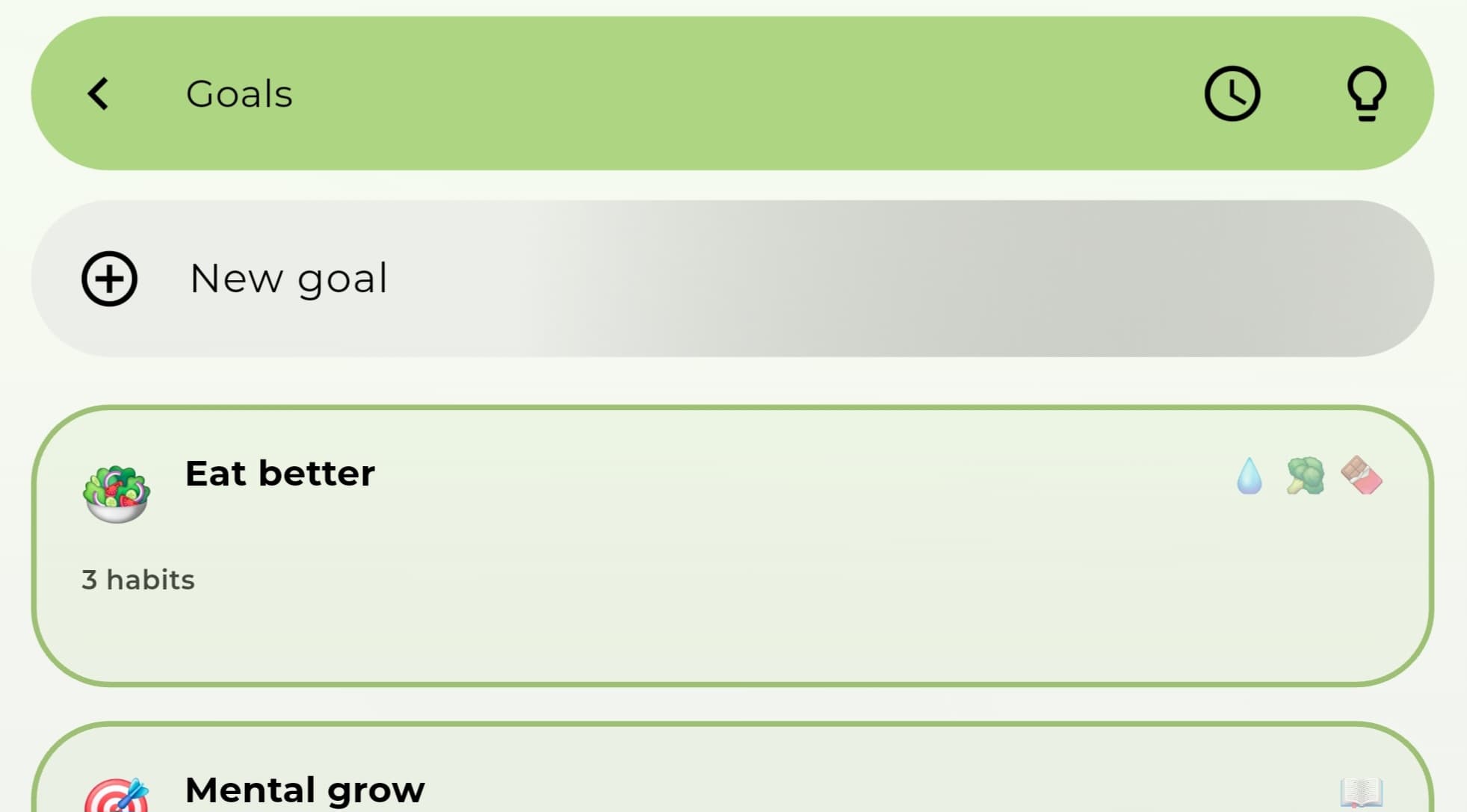
Should every Planner goal have daily habits? No. Match the schedule to the behavior. Some goals need weekly repetitions, projects, or one-off Tasks.
Sources and further reading
James Clear, Atomic Habits official book page and The 5 Triggers That Make New Habits Stick.
Phillippa Lally, Cornelia van Jaarsveld, Henry Potts, and Jane Wardle, How are habits formed: Modelling habit formation in the real world.
Peter Gollwitzer, Implementation intentions: Strong effects of simple plans.
Wendy Wood and Dennis Rünger, Psychology of Habit.
Benjamin Gardner, Charles Abraham, Phillippa Lally, and Gert-Jan de Bruijn, Towards parsimony in habit measurement.
Kaitlin Woolley and Ayelet Fishbach, Immediate Rewards Predict Adherence to Long-Term Goals.
Lianghao Zhu and colleagues, The relationship between habit and identity in health behaviors.
Planner is in the Inner Journal mobile app. Habits and goals are free and unlimited, and a completed task can become a prompt for a journal entry, so the day you did the thing and the day you wrote about it end up in the same place. With Plus you can also see your habits on the web. You create and edit them in the app. If you want to see what a small habit looks like in your writing over time, reading your own writing patterns is a good next step.
Download Inner Journal free on the App Store or Google Play.
Built with love 🤍 Rick
Have feedback? Reach out from inside the app or at contact@journalpersonaldiary.com.
%20Inner%20Journal.jpg&w=2560&q=75)